
 Unified Communication System
 All In One VoIP Phone System
 Class 5 VoIP Softswitch
 Carrier-Grade VoIP Billing
 Calling Card Solution
 Wholesale Softswitch Billing
 Call Center Solution
 Cloud PBX & Contact Center Solution
 Multi-Tenant PBX
 IP PBX System
 White Label Mobile Softphone
 Multi-Platform Softphone
 Call Tracking & Analytics Solution
 SMS Gateway
 AI-Powered IVR
 Softswitch Development
 Softphone Development
 OpenSIPS / Kamailio Development
 FreeSWITCH / Asterisk Development
 ASTPP / Magnus Billing Development
 Fusion-PBX Development
 WebRTC Development
 Chatbot Integration
 Conversational AI Integration
 Live Streaming & Broadcasting
 DevOps Services
 Webinar Services
 Web Development
 CRM Integration
 Digital Marketing
 UI/UX Design
 E-Commerce Development
 Our Work
 About us
 Contact us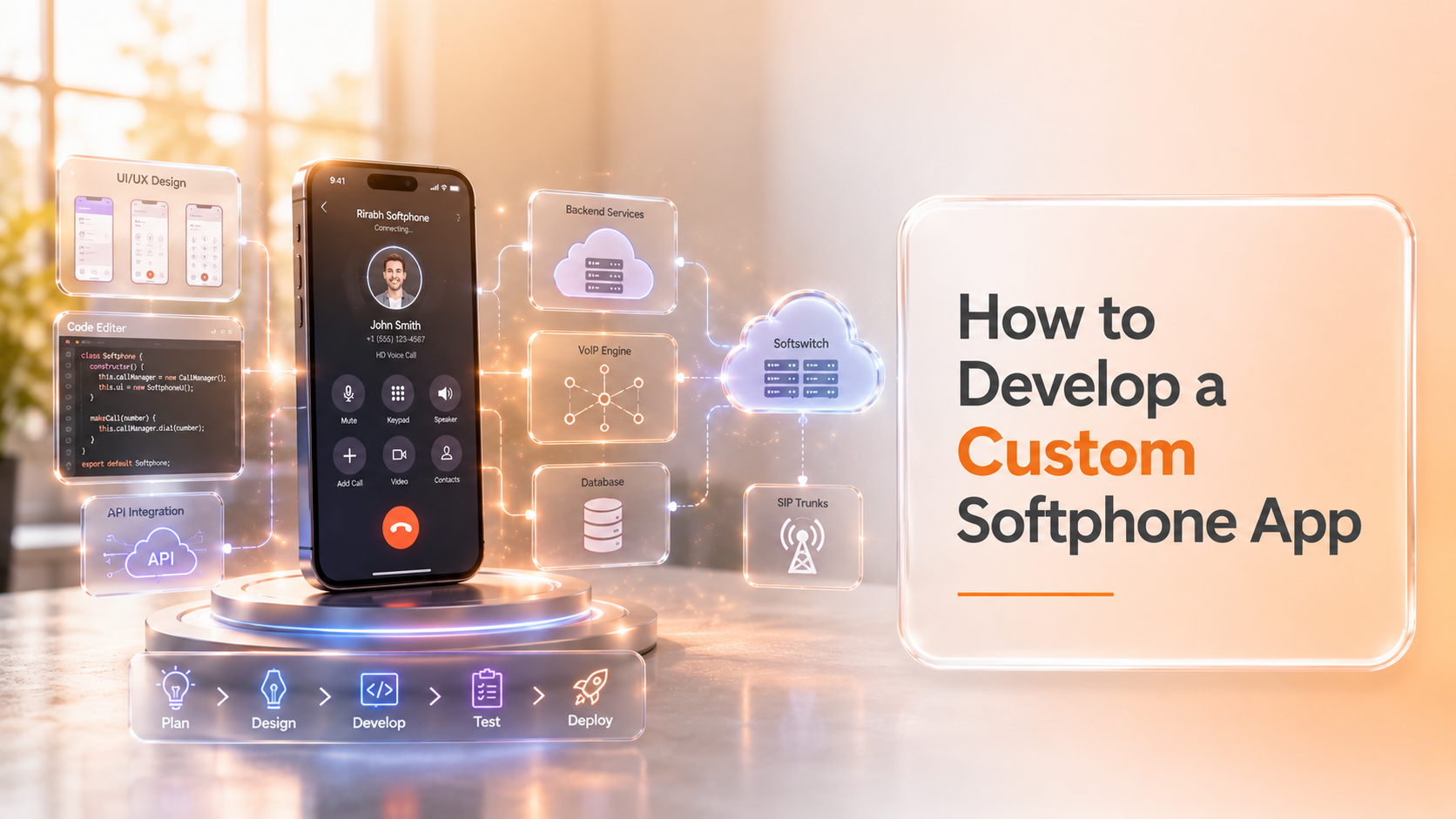
Businesses are switching from old telephone systems to internet-based calling solutions. A unique softphone software is one of the most helpful factors that is working for this change. Softphone app is a technology that is used in your smart device to make voice calls, video call and messaging. By generating a custom softphone app, businesses can reduce costs, boost productivity, and tailor communication features to their own operational needs.
Understanding Business Requirements
When you choose to create a bespoke softphone app, you must decide exactly what your organisation needs. Whether they are remote workers, sales teams, or call centre agents, you must decide what kind of service you want to create an application for and what features are important (as there are some primary requirements like voice and video calling, call recording, voicemail, call transfer, conferencing, chat, and CRM integration).
Selecting the Right Technology Stack
Selecting the right technology accumulation is important for making a reliable and high-performance softphone app. Most softphone apps are made using SIP for call signalling and the Real-Time Transport Protocol for media streaming. Developers usually use WebRTC for browser-based softphones, while native mobile apps depend on kinds of platforms like Android and iOS with VoIP libraries. Backend infrastructure may have cloud servers, SIP servers, and databases to manage users, call logs, and analytics.
Making an Automatic User Interface
A perfect softphone software program has to be easy to use, and the UI/UX design also has to concentrate on speed, clarity, and simplicity. Features should be flexible and clear because they will increase user satisfaction, like
- one-click calling,
- clear call status indicators,
- easy contact management,
- and minimal navigation.
Softphone apps are usually used for extended hours, ergonomic design and accessibility are equally important.
Creating Essential Features
Implementing key features is the first step in development after the design is complete. SIP registration, inbound and outgoing calls, call hold and transfer, voicemail, and contact synchronisation are examples of these. The app's value will be increased by adding some advanced features like call analytics, AI-powered noise cancellation, call routing, and CRM connection. When it comes to security encryption, secure authentication, and adherence to industry standards must be the top priorities.
Quality Testing
Proper quality testing is an important step before the deployment of any application. The testing phase will cover feature and function, as performance testing examines call quality, latency, and capacity, and functional testing verifies that every feature functions as planned. A smooth user experience is facilitated by compatibility testing across devices, operating systems, and network circumstances. Vulnerabilities like data leakage and call interception are prevented via security testing.
Deployment and Ongoing Support
The softphone app will be released via app stores or any other business distribution channels following successful testing. After deployment, app performance and security will be features that require attention. Keeping the application safe and secure may require continuous monitoring, updates, and functionality improvement. User feedback also plays an important role in improving performance and adding new capabilities over time.
Why Select a Custom Softphone App?
A custom softphone app is a strong functionality app that gives businesses full control over features, branding, security, and integrations. It rises with your growth and adjusts to growing communication requirements. Being connected with an experienced team will ensure faster delivery, strong architecture, and long-term dependability.
At Rirabh Consulting, we specialise in developing custom softphone applications that are tailored to your business goals and helping you to build smarter, more connected communication systems.