
 Unified Communication System
 All In One VoIP Phone System
 Class 5 VoIP Softswitch
 Carrier-Grade VoIP Billing
 Calling Card Solution
 Wholesale Softswitch Billing
 Call Center Solution
 Cloud PBX & Contact Center Solution
 Multi-Tenant PBX
 IP PBX System
 White Label Mobile Softphone
 Multi-Platform Softphone
 Call Tracking & Analytics Solution
 SMS Gateway
 AI-Powered IVR
 Softswitch Development
 Softphone Development
 OpenSIPS / Kamailio Development
 FreeSWITCH / Asterisk Development
 ASTPP / Magnus Billing Development
 Fusion-PBX Development
 WebRTC Development
 Chatbot Integration
 Conversational AI Integration
 Live Streaming & Broadcasting
 DevOps Services
 Webinar Services
 Web Development
 CRM Integration
 Digital Marketing
 UI/UX Design
 E-Commerce Development
 Our Work
 About us
 Contact us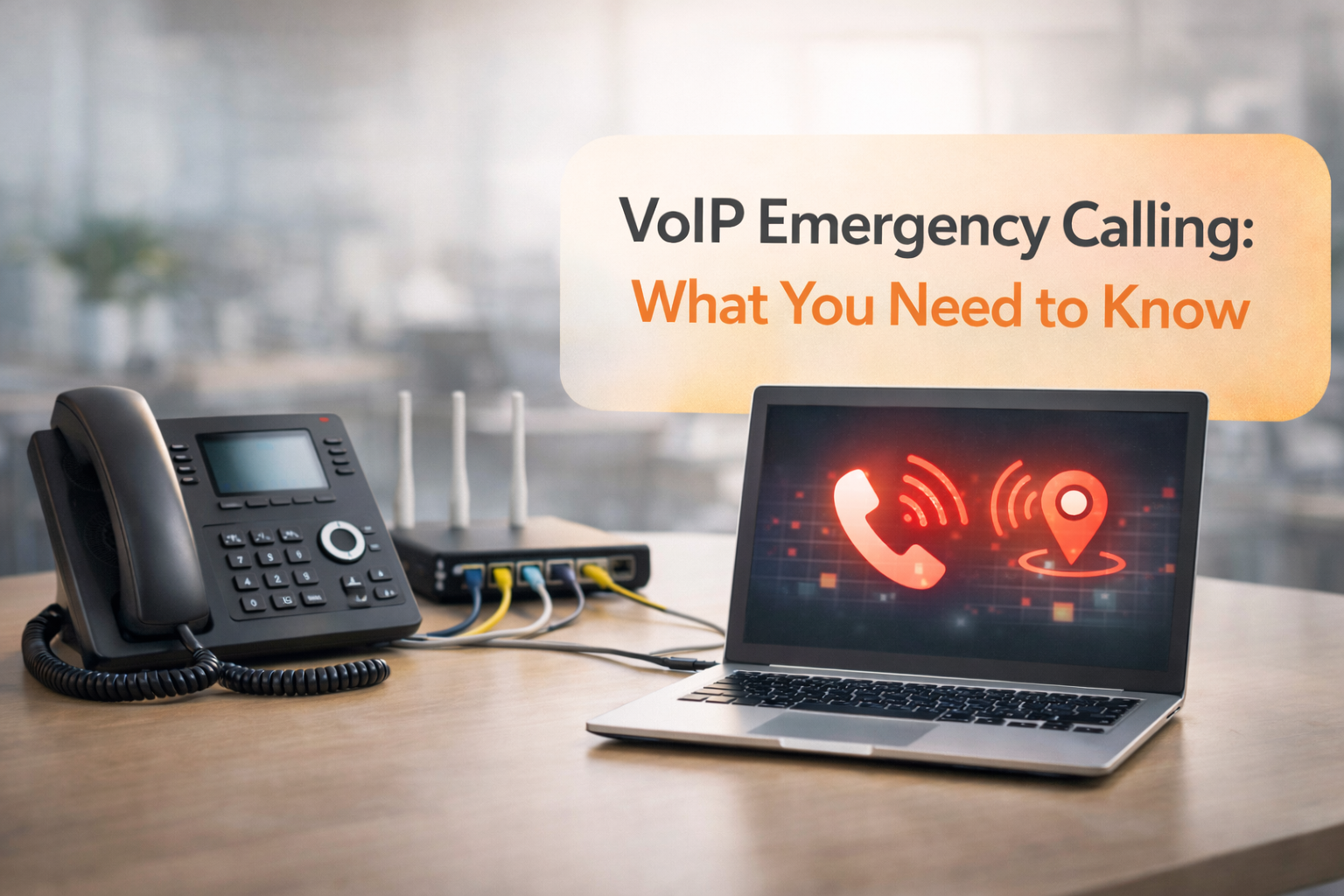
VoIP Emergency Calling: What You Need to Know
The difficulties of integrating VoIP networks with emergency services calls proved to be one of the primary challenges to the general adoption of VoIP. The ability to make calls from any device or place is a major advantage of VoIP. It implies that even when travelling, customers can effortlessly switch between other devices or make calls from the same number. However, this very advantage makes it challenging for VoIP services to support emergency services calling and makes it somewhat challenging to provide a satisfactory response to the question of whether and how to make emergency calls on VoIP.
Technical Challenges of Emergency Calling on VoIP
The Importance of Location
Because the device is not movable, each number on a traditional landline has a location that is difficult to modify. When users are calling an emergency number using a VoIP system, it will ask for their location. But occasionally, the caller might not be able to give an address because they are unable to talk, don't know where it is, etc.
Limited Power
VoIP phones require power to work because VoIP do not generate its own electricity, in contrast to traditional landline telephones. Therefore, if the electricity is switched off for whatever reason, emergency calls may not be possible. In these circumstances, enterprise users typically have power backup plans in place, but most consumers won't. Since most people are accustomed to routinely checking their phones' batteries, this is not a major problem for mobile phones. However, everyone is accustomed to landlines, which do not require emergency backup.
The Internet isn't working!
The Internet is not as dependable as phone service in the majority of the world. VoIP phones are unable to execute emergency calls when they have no connection to the Internet for any reason whatsoever. VoIP providers are unable to ensure emergency calling on their services for three key reasons: location, electricity, and Internet connectivity.
E911 or VoIP Emergency Calling
IP addresses, not phone numbers, are used to identify VoIP endpoints. Because VoIP numbers are movable, your location is not linked to them.
In the event of a "silent call," that is, when the caller is unable to disclose the address or is otherwise incapacitated, emergency operators will not be able to obtain an address because geolocation is blocked.
Although VoIP services have long been hampered by this restriction, many operators have lately implemented E911 calling, which is the VoIP equivalent of traditional 911 dialling.
Regulatory agencies have also imposed strict standards on VoIP services for connectivity to emergency services because VoIP networks are growing in popularity and will probably replace copper line networks over the next few decades.
How To Make Emergency Calls On VoIP Using Rirabh VoIP Services
Making emergency calls using VoIP services is simple and comfortable with Rirabh VoIP Services. Make sure that the registered location is correct and that emergency calling is enabled on your VoIP connection, because emergency personnel need this address to locate you, it is very important. Make sure your internet connection and power are available, and the added location is correct.